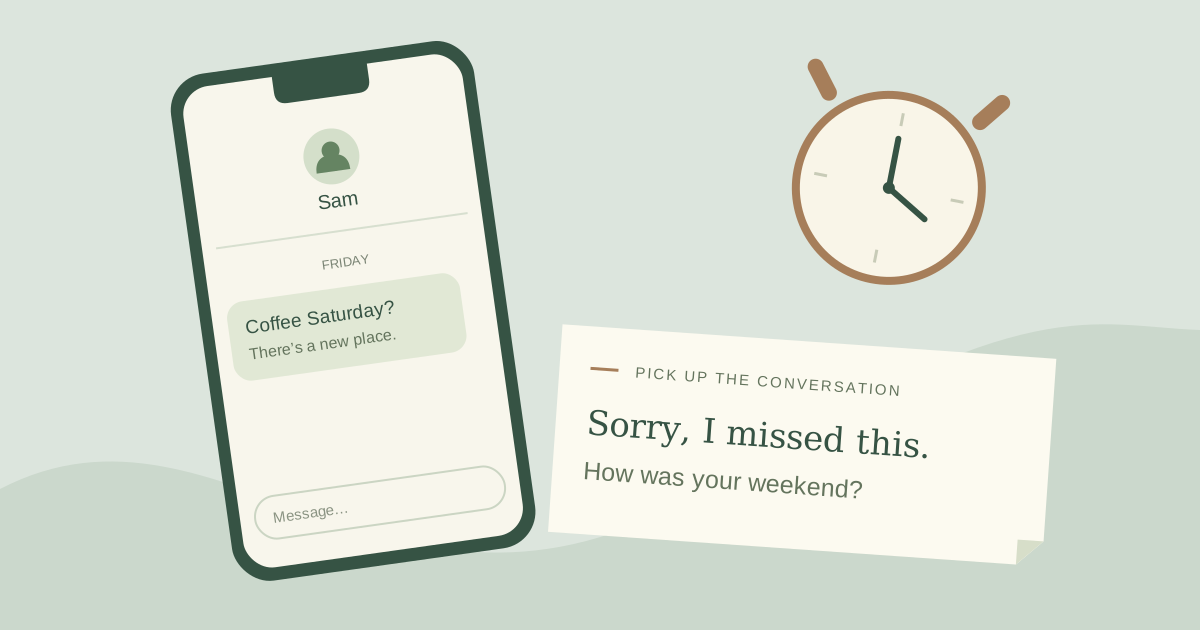
You think about an old friend, open their chat, and realise how long it has been. Now saying hello seems to require an explanation for the entire gap. You can start with a smaller conversation.
Experiments on friendly outreach found that senders often underestimated how much recipients appreciated hearing from them. That is a reason to reconsider the fear that you would be a bother, not a guarantee of a reply.
Say why they came to mind
A place you passed, a song, or simply missing them is enough. Something like “I went past our old flat today and thought of you. How have you been?” gives them an easy way in. You do not need an impressive life update or a clever opening line.
A short hello is one way to begin; you do not have to catch up on everything at once. If you keep putting it off, try messaging someone you already speak to before returning to the old conversation.
Be honest about how things were left
Drifting apart during a busy year is different from leaving an argument unresolved. If you hurt them or let them down, acknowledge what happened without asking them to pretend it is fine. If they asked you not to contact them, respect that.
For ordinary drifting, a brief acknowledgment may be enough. If something hurtful happened, give that conversation the attention it needs instead of skipping past it.
Get to know them as they are now
Ask about their current life as well as your shared memories. They may have changed jobs, moved, or stopped enjoying the thing you used to do together. Let them tell you.
If the conversation feels welcome, suggest a small catch-up. If they do not reply, give them space. Reaching out is an invitation; it does not commit either of you to picking up exactly where you left off.