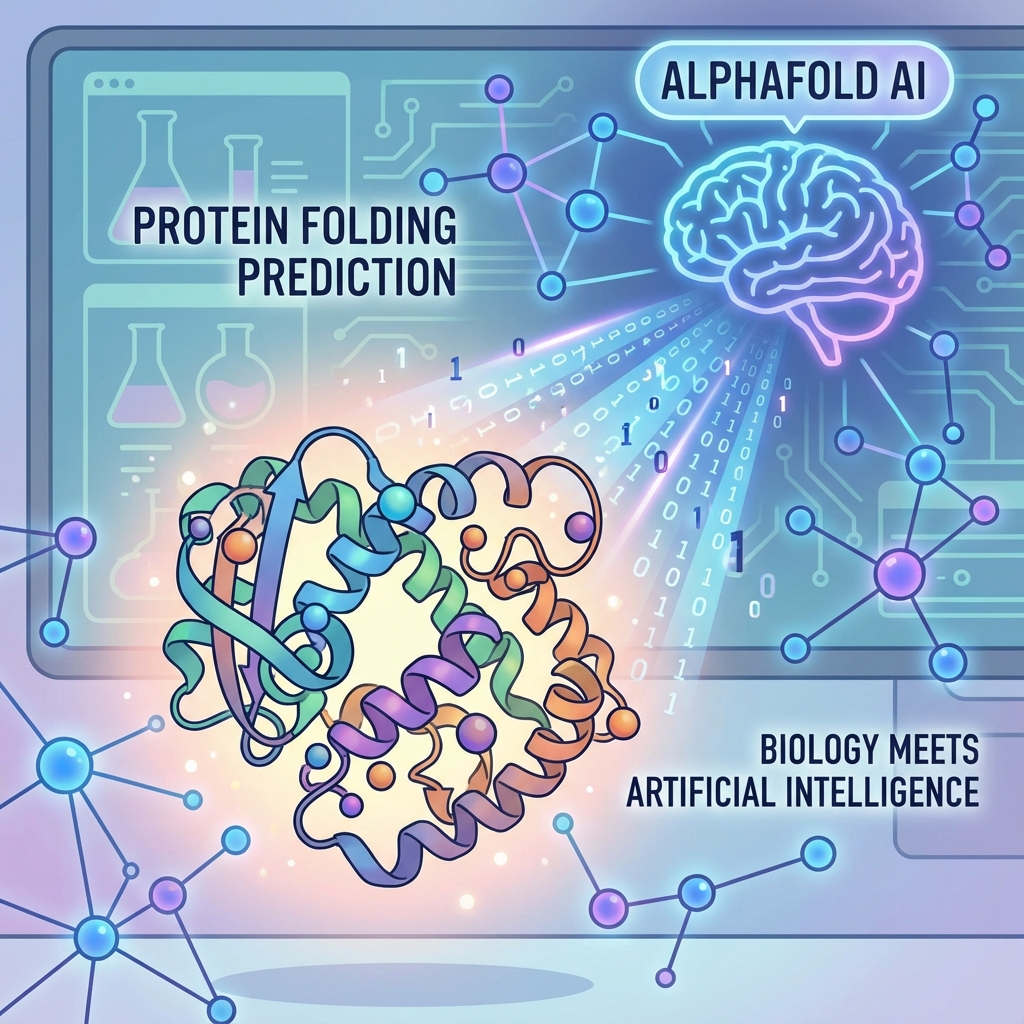
Biology is fundamentally about interaction. It is not enough to know the shape of the players; you must understand the game. While AlphaFold 2 solved the static structure of proteins—a 50-year-old grand challenge—AlphaFold 3 solves the "dance." On May 8, 2024, DeepMind unveiled a model that predicts not just protein shapes, but how they bind with DNA, RNA, and other small molecules.
In Silico Discovery: Accelerating Cures
The implication for medicine is profound. Traditional pharmaceutical research is a game of high-stakes trial and error, often requiring thousands of physical experiments to find a single compound that binds to a target. It is slow, expensive, and prone to failure. AlphaFold 3 allows researchers to perform this screening in silico (virtually). We can now screen billions of potential drugs against a target protein inside a computer server, narrowing down the field to the most promising candidates before a single test tube is used. This capability opens the door to targeting standard "undruggable" proteins and designing custom treatments for rare diseases that were previously economically impossible to address.
Beyond Structure: The Interaction Engine
Proteins rarely function in isolation. They are the gears of life, constantly snapping together with other molecules to trigger cellular responses. Previous models struggled to predict these complex interactions without massive computational cost. AlphaFold 3 changes this by utilizing diffusion models—the same generative AI technology behind image creators like Midjourney. Instead of assembling a structure piece-by-piece based on rigid chemical rules, the model starts with a noise cloud and progressively "denoises" it into an accurate molecular complex. This allows it to model the "lock-and-key" mechanisms of life with unprecedented accuracy, predicting binding affinity without needing physical crystals.
A New Lens on Life
Just as the microscope allowed us to see cells, AlphaFold 3 allows us to see the molecular machinery of those cells in action. It provides a high-resolution map of the biological world, turning biology from a descriptive science into a predictive engineering discipline. We are no longer just observing life; we are beginning to speak its language fluently.